

Posting your advertisement without any knowledge of the audience option on TikTok is like posting your content into a void and hoping for the best out of it. Many businesses jump straight into boosting video without ever exploring what platforms actually offer for targeting, and this approach usually leads to wasted budget.
Learning how to properly use TikTok audiences can be the difference between a campaign that flops and one that actually converts. Platforms give several ways to build and refine who sees the ad, and knowing when to use each one is key.
Understand different TikTok audiences available.
Before moving further, it will be helpful to know about options available in Ads Manager. Normally, TikTok offers some basic audiences that you can use depending on what stage you are at with your advertising campaign.
Core audience: The core audience allows you to manually select your desired audience based on demographics, interest, and behavior. This is recommended for the brand that already knows its customer segment very well. In this category, you can further segment your audience by age group, location, gender, and even devices used.
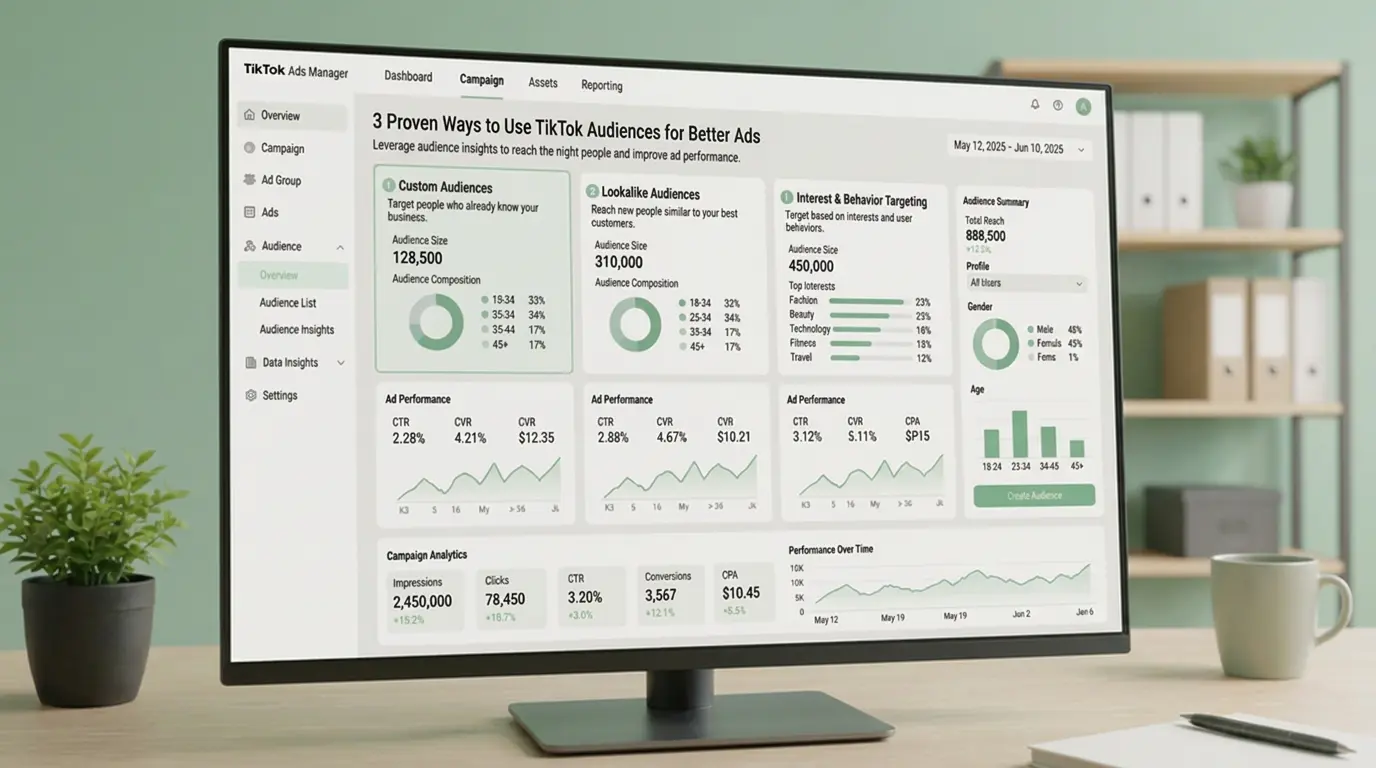
Custom audience: You have the ability to create custom audiences by uploading your customers’ data such as their email addresses or even website visitors so that TikTok will be able to match them with active TikTok users. It is highly efficient to use this type of TikTok audiences to retarget people who are already interested in your product.
Lookalike audience: A lookalike audience is one of the most effective ways to scale. TikTok examines your current customer or custom audience and creates new users with similar interests and behaviors. This strategy is especially useful once you already have a small but solid customer base to work from.
Why choosing the right type matters
Using the wrong audience type at the wrong stage can waste a lot of budget. For example, running a cold traffic campaign using only the retargeting audience will limit reach too much, while using pure lookalike too early, before having enough data, might give an inaccurate result.
1. Create a custom audience based on website visitors.
One of the best ways of doing this was creating a custom audience using website visitors through the TikTok pixel. This allowed the brand to retarget the users that are interested in its products, such as visitors of the product page who did not buy the product.
This approach tends to yield better conversions than working with a cold audience, as these users have heard about the product.
2. Use lookalike to scale winning campaigns.
Once a brand has a decent amount of customer or purchaser data, building a lookalike audience becomes a powerful next step. This helps find fresh users who behave similarly to the best existing customer, without needing to guess interest manually.
Many advertisers find this method especially useful once the initial campaign has already shown which customer segment converts best.
Tip for better lookalike results
- Use purchaser data instead of just website visitors when possible.
- The source audience should be of reasonable size.
- Try various sizes of percentage similarity such as 1% or 5%.
- Data refreshment of the source should be done periodically.
3. Combine interest and behavior for a cold audience
In companies that are just starting to develop their data infrastructure, the combination of targeting by interests with behavioral targeting allows for identifying potentially profitable cold audiences. Rather than relying solely on wide-interest categories, adding information such as recent purchase history or video consumption will make it more targeted.
This method is useful for companies that are experimenting with segmentations and that, after collecting enough data, will move to custom or lookalike approaches.
Final thought
Learning the art of understanding TikTok audiences does not mean settling on one tactic and using it forever but having the ability to know which tactic to apply to the present business stage. Utilizing a combination of custom, lookalike, and interest-based targeting when needed tends to produce the best results compared to any other approach.